
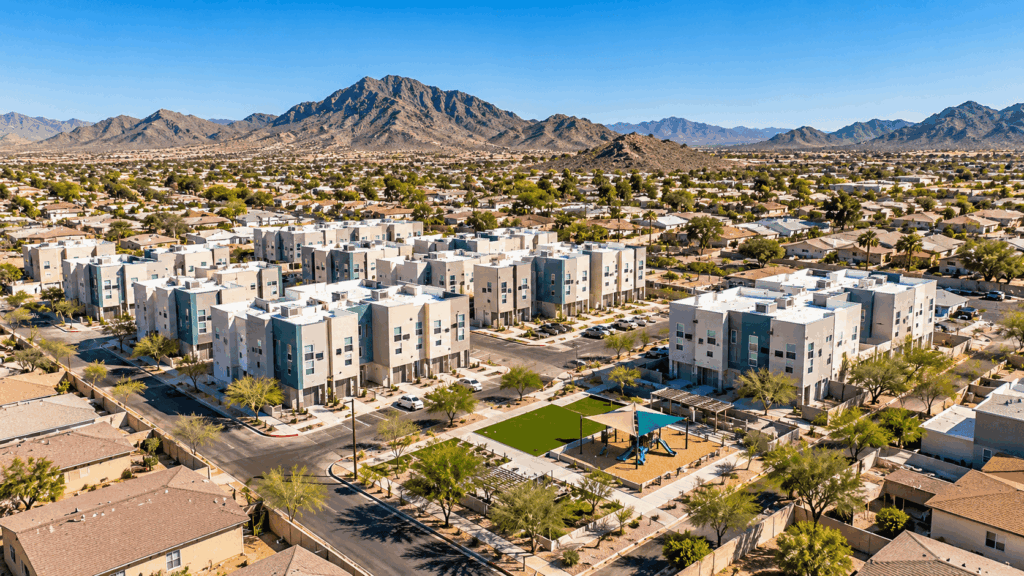
How Raw Land Becomes Ready for Construction
Every residential neighborhood, commercial development, and master-planned community begins with a piece of land. However, the transformation from undeveloped property into buildable lots involves far more than clearing vegetation and leveling the ground.
Before homes or commercial buildings can be constructed, developers must establish the infrastructure, access, utilities, and site conditions necessary to support future construction. This process is known as horizontal development, and it represents one of the most important stages in the real estate development lifecycle.
For investors and developers evaluating opportunities in Arizona, understanding horizontal development is essential to determining project feasibility, estimating costs, and identifying opportunities to create value.
In markets such as Lake Havasu City and throughout Mohave County, desert terrain, infrastructure availability, and local development requirements can significantly influence how land is prepared for construction.
At APX West, we approach land development as a coordinated process that connects strategic planning, engineering, and construction to transform raw property into functional, marketable real estate.
What Is Horizontal Development?
Horizontal development refers to the site improvements and infrastructure work required to prepare land for vertical construction.
While vertical construction involves building structures such as homes, offices, and commercial facilities, horizontal development focuses on the land and supporting infrastructure beneath and around those buildings.
Typical horizontal development activities include:
- Land surveying and site evaluation
- Grading and earthwork
- Road and access construction
- Drainage and stormwater management
- Water and sewer infrastructure
- Electrical and telecommunications utility installation
- Lot preparation and final site improvements
The result is a property that has progressed from raw land toward finished lots suitable for future construction, subject to applicable approvals and utility requirements.
For investors, this transformation can represent an important stage of value creation because builders and end users often prefer properties where major infrastructure improvements have already been completed.
1. Land Evaluation and Development Feasibility
Before physical improvements begin, developers must determine whether a property can support the intended project.
This starts with a comprehensive evaluation of the land’s physical, regulatory, and financial characteristics.
Important considerations include zoning, topography, soil conditions, utility availability, road access, drainage patterns, and environmental constraints.
For example, a large parcel may appear to offer significant development potential based on acreage alone. However, steep slopes, natural drainage channels, or limited utility access may reduce the amount of land that can be economically developed.
Developers must also evaluate how many usable lots can realistically be created after accounting for roads, setbacks, easements, drainage facilities, and other requirements.
This analysis helps establish the property’s potential yield and provides a foundation for estimating development costs.
Early feasibility work is particularly valuable because decisions made before acquisition or entitlement can have significant financial implications later.
2. Grading and Earthwork: Preparing the Site
Once a development concept has been established and the necessary approvals are in place, grading and earthwork become central components of horizontal construction.
Grading reshapes the terrain to create appropriate elevations for roads, building pads, drainage systems, and other improvements.
Depending on the property, this may involve excavation, filling, soil compaction, rock removal, or the construction of retaining structures.
In Arizona’s desert environment, grading can be especially complex.
Natural slopes, rocky terrain, and variable soil conditions may require specialized equipment and carefully engineered solutions.
One of the primary objectives is to balance the amount of soil excavated from one portion of the property with the amount needed elsewhere on the site.
When feasible, balancing these quantities can reduce the need to import or export large volumes of material, helping control transportation and construction expenses.
Through our engineering services, APX West evaluates site conditions and technical requirements to support practical grading, infrastructure, and development strategies.
3. Road Construction and Site Accessibility
Road infrastructure is another essential component of the land development process.
Residential subdivisions and commercial properties require reliable access for residents, visitors, emergency vehicles, deliveries, and construction equipment.
Depending on the project, road improvements may include internal streets, access roads, intersections, curbs, sidewalks, and connections to existing public infrastructure.
Road design must account for traffic circulation, safety requirements, drainage, and the intended use of the development.
For residential projects, an efficient street layout can influence the number and configuration of finished lots.
For commercial developments, road accessibility may directly affect how easily tenants, customers, and delivery vehicles can reach the property.
Developers must also determine whether off-site improvements are required.
A project may need modifications to an existing roadway or additional access infrastructure before it can receive final approvals.
Because road construction can represent a substantial expense, it should be incorporated into the financial feasibility analysis from the earliest stages.
4. Drainage and Stormwater Management in Desert Environments
Drainage planning is particularly important in Arizona, where intense rainfall events can produce significant runoff even in areas that receive relatively little annual precipitation.
Desert soil conditions, natural washes, and elevation changes can influence how stormwater moves across a development site.
Without appropriate drainage infrastructure, runoff may create erosion, damage roads, affect building pads, or threaten surrounding properties.
Horizontal development therefore often includes engineered drainage channels, retention or detention facilities, culverts, and other stormwater management improvements.
These systems must be designed around site-specific conditions and applicable local regulations.
Drainage infrastructure is not simply a technical requirement. It also affects the layout, usable acreage, construction cost, and long-term performance of the development.
The Federal Emergency Management Agency Flood Map Service Center provides flood hazard information that can help developers and investors begin evaluating potential flood-related considerations.
However, published flood maps do not replace detailed site-specific drainage studies or engineering analysis.
Understanding water movement early helps developers identify potential constraints before they become costly construction problems.
5. Installing Water, Sewer, and Utility Infrastructure
A finished lot must have access to the utilities required for its intended use.
Depending on the location and development type, infrastructure improvements may include potable water distribution, wastewater connections, electrical service, natural gas, telecommunications, and related utility facilities.
Utility installation requires coordination with service providers, engineers, contractors, and local authorities.
The complexity of this work varies considerably.
A property adjacent to established utility networks may require relatively straightforward connections, while more remote land may need substantial infrastructure extensions.
Developers must evaluate available system capacity as well as physical proximity.
For example, an existing water line near a property does not necessarily mean the system can accommodate a proposed development without additional upgrades.
Utility planning also affects construction sequencing. Underground infrastructure generally needs to be coordinated with grading and roadway improvements to avoid unnecessary excavation and rework.
Accurate utility planning helps establish realistic schedules and prevents infrastructure costs from becoming unexpected obstacles.
6. Subdivision Design and Finished Lot Preparation
Once major site improvements have been planned, developers must determine how the property will be divided into individual lots.
Subdivision design considers lot dimensions, building setbacks, access, easements, drainage requirements, and market demand.
The objective is to create lots that are both physically buildable and attractive to the intended buyer or builder.
For residential developments, lot configuration may influence home placement, garage access, outdoor living space, and privacy.
In commercial developments, lot dimensions and site access can affect building layouts, parking, loading areas, and future expansion opportunities.
Developers must balance the desire to maximize the number of lots with the need to maintain functionality and market appeal.
A higher lot count does not always translate into stronger project economics if the resulting properties are difficult to build on or less desirable to buyers.
Thoughtful subdivision design helps connect engineering feasibility with the realities of the real estate market.
7. Why Horizontal Development Creates Value for Land Investors
One of the primary opportunities in land development is the potential increase in property utility and marketability as raw land is transformed into finished lots.
Raw land often carries uncertainty related to zoning, access, infrastructure, grading, and development costs.
By completing the necessary improvements and obtaining required approvals, a developer can reduce some of those uncertainties for future builders or purchasers.
Finished lots may appeal to homebuilders who want to focus on vertical construction rather than manage the entire land entitlement and infrastructure process.
They can also provide opportunities for developers pursuing phased residential or commercial projects.
However, value creation is not automatic.
The completed lots must be worth more than the total cost of acquiring, improving, financing, and marketing the property for the project to generate an acceptable return.
Investors should evaluate anticipated finished lot prices, absorption rates, competing inventory, and total development expenses before committing capital.
A disciplined financial analysis is essential to determining whether the proposed horizontal improvements justify the investment.
8. The Importance of Construction Coordination
Horizontal development involves multiple disciplines and construction activities that must occur in the correct sequence.
Grading, drainage, underground utilities, roadway construction, and final site improvements are closely connected.
Poor coordination can create delays, additional excavation, material waste, and unnecessary expenses.
For example, installing underground utilities after roadway paving may require cutting into completed surfaces, increasing costs and potentially affecting quality.
Similarly, changes to drainage infrastructure after grading is complete may require substantial rework.
Coordinated construction management helps align contractors, schedules, budgets, and technical requirements throughout the process.
APX West’s construction services (https://apxwest.com/what-we-do/construction/) support the execution of development projects with attention to project sequencing, quality, and financial objectives.
When engineering and construction teams collaborate early, potential conflicts can be identified before they disrupt field operations.
9. Planning for Environmental and Regulatory Requirements
Horizontal development must also comply with applicable environmental and regulatory standards.
Depending on the project, this may involve stormwater permits, erosion control measures, grading approvals, subdivision requirements, and utility-related permits.
The U.S. Environmental Protection Agency Construction Stormwater Program provides information about federal stormwater requirements for qualifying construction activities.
Arizona projects may also be subject to state and local permitting requirements.
Understanding these obligations before construction begins helps developers establish realistic timelines and avoid preventable compliance issues.
Regulatory planning should be integrated into the overall development strategy rather than treated as a separate administrative task.
10. Connecting Horizontal Development to the Final Real Estate Product
The most effective horizontal development strategies begin with a clear understanding of what the finished property is intended to become.
A residential subdivision designed for smaller attainable homes may require a different lot configuration and infrastructure approach than a community intended for larger luxury residences.
Similarly, a commercial business park must account for tenant access, parking, loading requirements, utilities, and potential future building uses.
These decisions influence everything from grading and roadway design to utility capacity and construction budgets.
Developers who plan with the end user in mind can make more informed infrastructure investments and avoid creating lots that are technically buildable but poorly suited to market demand.
Through our real estate planning services, APX West connects early land evaluation and development strategy with the practical requirements of delivering marketable properties.
Transforming Land Into Opportunity
Horizontal development is the foundation of successful residential and commercial construction. Before a home can be built or a business can occupy a property, the land must be carefully evaluated, engineered, and prepared to support its intended use.
From grading and drainage to roads, utilities, and finished lot preparation, each stage plays a critical role in creating functional real estate assets.
For landowners and investors, understanding this process provides a clearer picture of the costs, risks, and opportunities involved in transforming raw property into buildable land.
Have land with development potential? APX West can help you evaluate the opportunity and develop a strategy for moving from raw acreage to construction-ready lots. Contact our team to explore how our planning, engineering, and construction expertise can support your next Arizona real estate development project.